AI call screeners hide paying consumers. proAgent gets through.
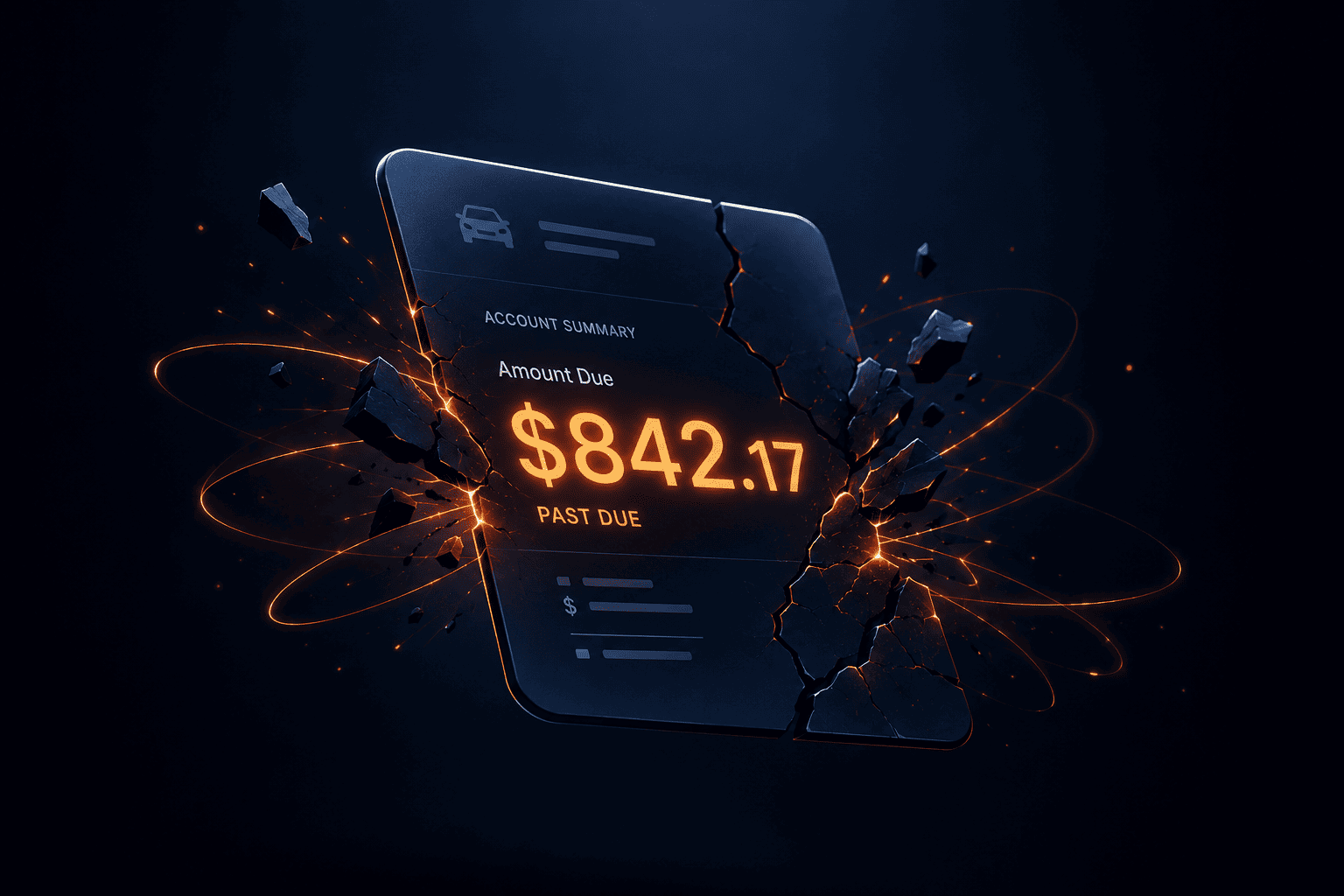
On a subprime auto lender’s outbound program, calls that an AI call screener answered first produced $17,755 in payments set up over three weeks. Calls where a person picked up directly set up $68,822, so screened calls added another 25.8%1. A dialer’s answering machine detection (AMD) would have hung up on every one of those screened calls.
Most dialers read a screener as an answering machine and disconnect, so the customer behind it never hears from the lender.
Three weeks of screened calls
The lender switched on screener handling on October 12. By November 2, 2,081 of 25,780 outbound calls (8.1%) had reached a call screener. proAgent got past the screener to the customer on 170 of those calls (8.2%), and 27 of the 170 customers (16%) set up a payment1.
25,780
Outbound calls placed
8.1%
of those calls were answered by a call screener (2,081 calls)
170
screened calls reached a person, 8.2% of screener calls
16%
of those customers set up a payment (27 customers)
Together, screened calls added 25.8% in payments set up on top of calls that reached a person directly.
Subprime auto lender program, October 12 to November 2, 2026. A standard dialer reads a screener as an answering machine and hangs up.
How the customer was reached
Payments set up
Amount set up
A person answered directly
120
$68,822
A call screener answered first
27
$17,755
Why AMD hangs up on screeners
Dialers were built to protect agent time. Predictive dialing passes through only the calls a person answers, and AMD drops anything that sounds like a machine before a human agent hears it. That made sense when fewer than 5% of answered calls had a real person on the line3.
One large collections agency even staffed a team in South Africa to call through voicemails and screeners and transfer live consumers to collectors onshore.
Some vendors now sell “smart” AMD that can tell a screener from a voicemail. Knowing it’s a screener doesn’t help much when the next move is still to hang up, pass the call to a human, or play a recording.
What a dropped screener call costs
Cost
What happens
A lost conversation
The customer was seconds away from picking up, and the call ended first.
A spent call attempt
For third-party agencies, Regulation F counts unanswered calls toward its limit of 7 calls in 7 days4,5. Each hang-up uses an attempt and produces no conversation.
A misidentified customer
Some screeners read the customer’s name back. A system that hears the name can mistake the screener for the customer3 and start the account conversation with a machine.
One account: AMD hung up 12 times, proAgent got through on its first call
On a large card issuer’s first-party collections program, a credit card account charged off in August 2024 owed about $1,500. Between September 11 and October 19, the dialer called the customer 12 times2. Each call reached an AI call screener, and each time AMD marked it as an answering machine and hung up after 16 or 17 seconds.
Dialer log for one charged-off card account
Attempt
Date
Time
Dialer result
Length (sec)
1
Sep 11
11:51 AM
Machine hang-up
16
2
Sep 21
3:14 PM
Machine hang-up
16
3
Sep 22
1:44 PM
Machine hang-up
16
4
Sep 24
3:01 PM
Machine hang-up
16
5
Sep 25
3:56 PM
Machine hang-up
16
6
Sep 28
3:13 PM
Machine hang-up
17
7
Oct 1
3:21 PM
Machine hang-up
16
8
Oct 2
3:32 PM
Machine hang-up
16
9
Oct 5
3:08 PM
Machine hang-up
17
10
Oct 7
4:52 PM
Machine hang-up
16
11
Oct 16
2:39 PM
Machine hang-up
17
12
Oct 19
3:11 PM
Machine hang-up
16
proAgent
Oct 22
1:29 PM
Answered
508
Each dialer attempt was classified as an answering machine and ended after 16 to 17 seconds. Customer, phone and account details removed.
On October 22, proAgent called the same number once. The screener asked it to stay on the line at 15 seconds, and the customer picked up at 24. The call ran 8 minutes and 28 seconds and ended with the customer agreeing to pay the full balance, with no settlement and no discount. Both payments came in by October 30, and the account was paid in full.
The first 31 seconds of proAgent’s call
0:00
Agent
“Hello?”
Short greeting while proAgent works out who answered
0:00
Screener
“Name and reason for calling. I’ll see if this person’s available.”
0:04
Agent
“This is an AI assistant from [Card issuer] calling about a concern on your account.”
Says it’s an AI, shares no account details
0:15
Screener
“Thanks. Please stay on the line.”
Screener passes the call on. The dialer was gone by 16 seconds on every earlier attempt
0:24
Customer
“Hello?”
Customer picks up, 24 seconds into the call
0:26
Agent
“Hello, I am an AI assistant from [Card issuer]. Am I speaking with [Customer]?”
0:31
Customer
“Yes.”
Right person confirmed
proAgent’s call on the first-party collections account, October 22, 2026. Issuer and customer names removed.
How proAgent handles a call screener
An AI agent has no idle time to protect, so it can wait on the line. proAgent works out who answered before it says anything that matters3.
Every outbound call opens with a short greeting while proAgent identifies who answered.
A separate screening model makes that decision, reading AMD as one signal among several.
With a screener, the agent gives its name and company, holds, and hands over to the main AI agent when the customer picks up.
With a voicemail greeting, it leaves a complete callback message after the beep.
If your team already has a screener strategy or script, proAgent can follow it.
Behind your existing dialer, calls the dialer flags as a machine can be routed to proAgent instead of being disconnected.
Screened calls will keep growing
Most new phones now come with call screening built in, and more customers get it every time they upgrade their phone. The share of outbound calls a screener answers will only grow, and so will the payments lost when a dialer hangs up.
When phones started answering for people
Google
Call Screen launches on the Pixel 3. Google Assistant answers an unknown caller, asks who is calling and why, and shows the owner a live transcript.